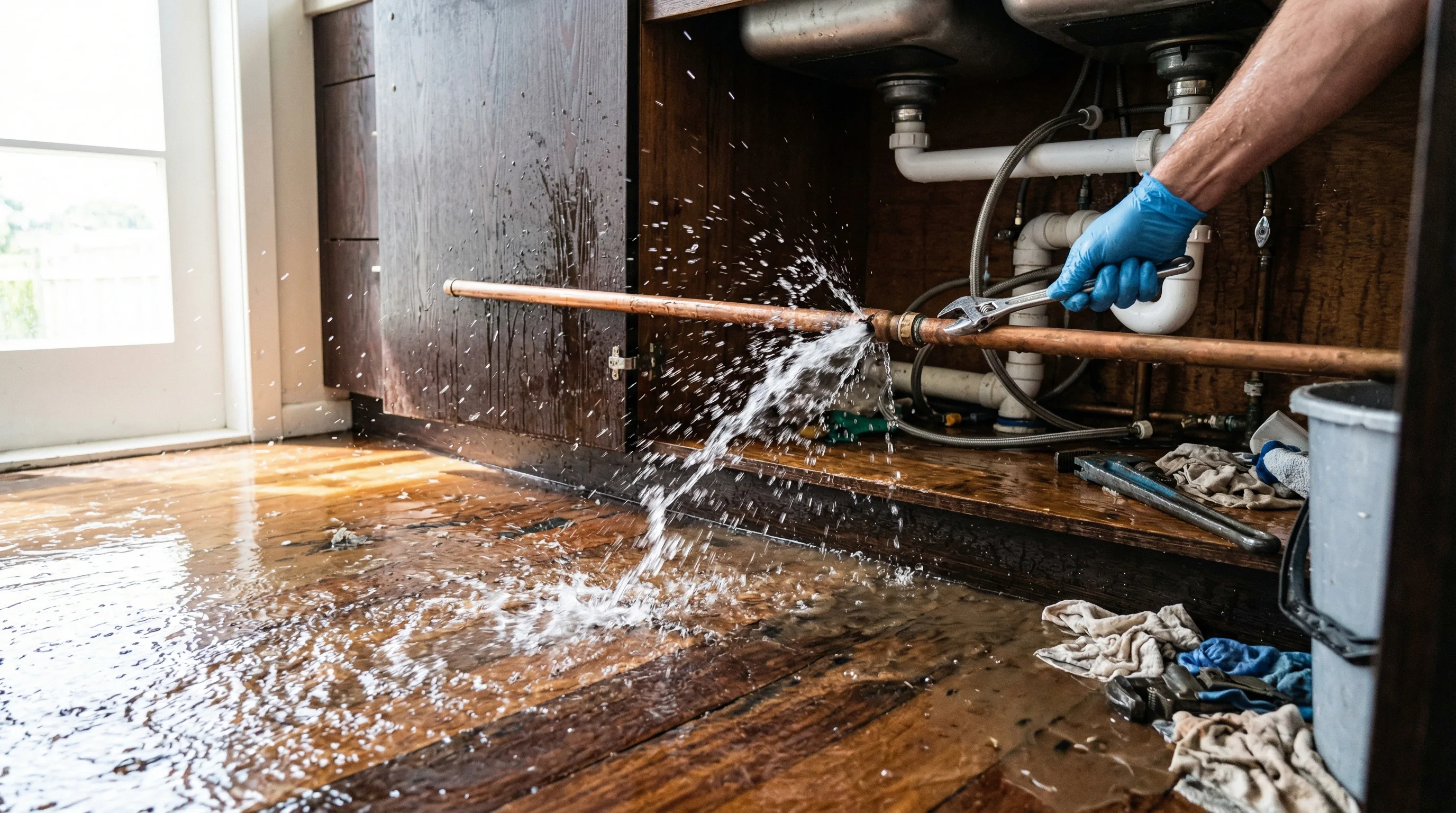

A burst pipe is one of the most stressful plumbing problems a homeowner can face. Water gushing through your ceiling, flooding your kitchen floor, or pooling in your garage — it can cause thousands of dollars in damage to your Auckland home within minutes if you don't act fast. The good news is that there are clear, practical steps you can take right now to minimise the damage while you wait for a certified plumber to arrive.
As a certified plumber who's attended burst pipe call-outs across Auckland — from villas in Devonport to modern homes in Albany — Kurt at KA Plumbing has seen every scenario. This guide walks you through exactly what to do, step by step, so you can protect your home and your family.
Step 1: Turn Off Your Main Water Supply
This is the single most important thing you can do. Every Auckland home has a main shutoff valve — commonly called a toby — usually located at the front boundary of your property near the footpath. It's typically housed in a small plastic or concrete box at ground level. Turn the valve clockwise until it stops. This cuts the water supply to your entire house and stops the burst pipe from continuing to flood your home.
Can't find your toby? It's usually near your front gate or driveway entrance, flush with the ground. Look for a small rectangular or round cover. If you can't locate it, call Watercare on 09 442 2222 or call Kurt on 021 277 9151 — he can talk you through it over the phone.
If the burst pipe is on your hot water supply (the water coming out is warm), also turn off your hot water cylinder at the electrical switchboard. This prevents the element from burning out in an empty cylinder, which would add a second repair to your bill.
Step 2: Open Your Taps to Drain the System
Once the main water is off, open all the taps in your home — both hot and cold. This drains the remaining water from your pipes and reduces the pressure on the burst section, slowing or stopping the leak. Start with taps that are lower than the burst location if possible, as gravity will help drain the system faster. Flush all toilets as well to empty the cisterns.
Step 3: Contain the Water
While the system drains, focus on containing the water that's already escaped. Grab towels, buckets, and mops. If water is coming through the ceiling, place buckets underneath and carefully poke a small hole in the ceiling plasterboard to let the water drain in a controlled way — this prevents the weight of pooled water from collapsing an entire section of your ceiling, which would cause far worse damage.
Move furniture, electronics, and valuables away from the affected area. If the flooding is significant, turn off the electricity to the affected rooms at your switchboard as a safety precaution — water and electricity are a dangerous combination.
Step 4: Document the Damage for Insurance
Before you start cleaning up, take photos and video of the damage. Photograph the burst pipe itself (if you can safely access it), the water damage to floors, walls, ceilings, and any belongings that have been affected. This documentation is essential for your insurance claim. Most home insurance policies in New Zealand cover sudden burst pipe damage, but your insurer will want evidence of the damage before repairs begin.
Insurance tip: Don't wait to file your claim. Contact your insurer as soon as possible — many providers have dedicated claims lines. The sooner you report it, the smoother the process.
Step 5: Call a Certified Plumber
With the immediate risk contained, it's time to call a professional. A burst pipe needs a certified plumber — not a handyman, not a DIY YouTube fix. The repair needs to meet New Zealand Building Code standards, especially if it's within a wall cavity or connected to your mains supply. Call Kurt at KA Plumbing to explain the problem and discuss the fastest available service across Auckland.
When you call, be ready to describe where the burst is (which room, which pipe if you can tell), whether it's hot or cold water, and whether you've been able to turn off the main supply. This helps Kurt arrive prepared with the right parts and equipment to fix the issue in a single visit.
What Causes Burst Pipes in Auckland Homes?
Understanding why pipes burst can help you prevent it happening again. The most common causes Kurt sees in Auckland homes include:
- Aging pipework — galvanised steel pipes in older Auckland homes (pre-1980s) corrode from the inside over decades, thinning the pipe walls until they fail. This is particularly common in suburbs like Takapuna, Birkenhead, and Devonport.
- High water pressure — Auckland's hilly terrain means some properties receive water at very high pressure from the council mains. Without a pressure-reducing valve (PRV), this constant high pressure stresses your pipes, joints, and fittings until something gives.
- Frost damage — while Auckland doesn't get extreme cold, exposed pipes in unheated areas (garages, under-floor spaces, exterior walls) can freeze during winter cold snaps, especially on the North Shore's exposed coastal suburbs.
- Tree root intrusion — Auckland's large, established trees can have root systems that wrap around and crush underground pipes, causing them to crack and eventually burst.
- Poor previous repairs — DIY fixes or substandard plumbing work can create weak points that fail under normal water pressure.
How to Prevent Burst Pipes
Prevention is always cheaper than urgent repairs. Here's what Kurt recommends to Auckland homeowners:
- Know where your toby is — find it now, before you need it. Practice turning it on and off so you're confident if you ever need to use it in a hurry.
- Get a plumbing health check — if your Auckland home is more than 30 years old, consider having Kurt inspect your pipework. He can identify aging galvanised pipes, corroded fittings, and potential failure points before they turn into urgent problems.
- Install or check your PRV — a pressure-reducing valve protects your entire plumbing system from excessive council water pressure. Kurt can test your water pressure and install a PRV if needed.
- Insulate exposed pipes — pipes in garages, under floors, and on exterior walls should be lagged (insulated) to protect against Auckland's winter cold snaps.
- Don't ignore small leaks — a dripping tap or a weeping joint is often an early warning sign. Get it fixed before it becomes a burst pipe.
When to Call an Urgent Plumber
Not every plumbing issue is urgent, but a burst pipe always requires immediate action. Call a plumber if you have water flooding any room in your home, water coming through your ceiling or walls, a pipe that has visibly split or broken, you can hear water running but can't find the source, or your water meter is spinning even with all taps turned off. Kurt personally attends every KA Plumbing callout — you're not getting a random contractor, you're getting the certified, experienced plumber who owns the business.
Need help fast? Call Kurt on 021 277 9151 to explain the problem and discuss the quickest available service across Auckland.
Need Help With This Issue?
Call Kurt for fast, reliable service and free assessments across Auckland.
Related service: Plumbing repair →